ENERGY Equity Epic Sengkang Pty. Ltd (EEES) is a Cooperation Contract Contractor (KKKS) that operates the Sengkang Oil and Gas Block located in Wajo Regency, South Sulawesi under the supervision of the Special Task Force for Upstream Oil and Gas Activities (SKK Migas).
Since its production in 1997 EEES has produced natural gas from 3 (three) gas wells, each located in Macanang Village, Majauleng District, then in Lamata Village and Poleonro Village, Gilireng District. Raw gas from the three gas wells will be channeled to the Kampung Baru Central Processing Plan (CPP) in Poleonro Village, Gilireng District, and then flowed to the PLTGU Sengkang.
The results of these three gas wells have contributed to the supply of electricity in South, West and Southeast Sulawesi. Apart from CPP, EEES also built other operational support facilities to support production facilities, namely a basecamp for operating personnel in Abbatireng Village and an office building in Poleonro Village, Gilireng District.
Concern for the condition of the people in the area of operation is of great concern to EEES. The Cooperation Contract Contracting Company (KKKS), which operates in the Kampung Baru gas field in Gilireng District, Wajo Regency, continues to play a positive role for the welfare of the surrounding community. One of them is through Corporate Social Responsibility (CSR) programs.
Under the supervision and guidance of SKK Migas, the EEES CSR program is aimed at touching the social strata of the economically weak group, so that it is hoped that it can play a role in helping to reduce poverty.
After going through a series of social and regional potential assessments, around the end of 2011, EEES initiated the “Revolving Cattle Cattle Program”. This program is the result of good coordination between the Wajo District Animal Husbandry Service, sub-district governments, and village governments around the EEES operational areas.
The scheme of the Revolving Cattle Livestock Program is to distribute five female calves to livestock groups which also consist of 5 people. To ensure the quality of the breeding cattle, the Livestock Service Office assigned a team of veterinarians to carry out a health check on the cows to be given, as well as to ensure that the donated cows were free from disease. The specifications must also meet the criteria, namely a minimum hump height of 103 cm with a minimum age of 2 years. To ensure targeting accuracy, EEES also collaborates with local, sub-district and village governments to determine beneficiary residents. Through a verification process, it is confirmed that beneficiaries are citizens who are not yet prosperous but have the ability to raise cattle.
Rolling
The aspect of sustainability is the main thing in developing a CSR program strategy. Reflecting on previous failures, the livestock rolling aspect is the key to the program’s continuity and sustainability.
After inspection of the livestock and verification of the beneficiaries is carried out, the female cattle are distributed to members of the beneficiary group to be maintained and bred. Revolving is done after the cows have been kept for 3 years or have had 2 children. To maintain good quality of cattle, rolling is done in two ways, namely:
First, the beneficiary rolls over the livestock which must first be verified by a team of veterinarians. Second, the beneficiary deposits an amount of money for a cow according to the specifications to the program assistant and then buys a cow according to the agreed conditions, namely a hump height of 103 cm with a minimum age of 2 years.
With this kind of revolving mechanism, the quality of the herds that are rolled out can be maintained and the next beneficiary can get cattle of appropriate and proper quality, not too small or diseased. After carrying out the revolving obligation, the beneficiary is categorized as “independent” with 2 cows that already belong to him.
Through a revolving scheme and mechanism like this, program sustainability can be maintained. Over time, the benefits of the program can be felt by more residents, however, the company no longer needs to buy cows to help other residents.
Program Assistant
The rolling cattle program is not something new, this kind of program has been tried by the government several times through grants to the community. However, programs like this often fail for various reasons. The most influential cause is the lack of program oversight.
Cattle that have been distributed, their maintenance and development are not monitored so that the revolving mechanism that has been determined is difficult to implement. Instead of revolving, the distributed heifers disappear somewhere and often leave legal problems for the parties involved.
Supervision seems to be a key factor in the revolving cattle breeding program, especially since the herds are currently unable to breed in groups. This is due to the mechanism for selecting beneficiaries based on criteria, some beneficiaries sometimes live quite far from other group members and the livestock assistance often has to be raised individually.
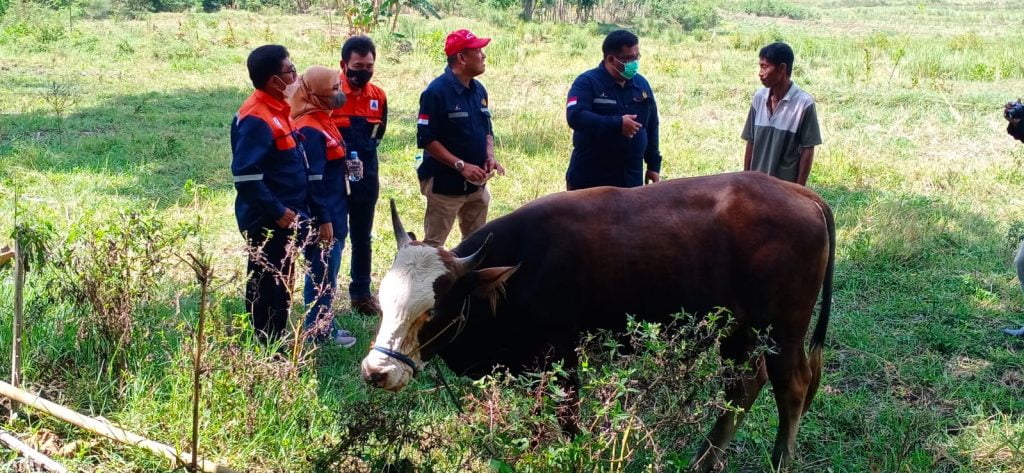
Recognizing the risk of this condition, EEES formed a program companion team consisting of a veterinarian assisted by a staff member. The main task of the assistance team is to supervise the cattle. Monitoring carried out covers the health condition of the cows, death, loss and birth of new calves.
Monitoring data is documented monthly in the form of a report. If there are beneficiaries who meet the requirements for rolling, the assistant’s job is to carry out rotation by ensuring that the cows to be rolled out must meet the criteria and communicate with local recipients to determine potential recipients of rotation.
In addition to supervising livestock turnover, the assistance team also provides animal health services to beneficiary residents. If there are sick livestock, beneficiaries can contact the assistance team to obtain free health services. Besides that, mentoring activities also include counseling and increasing the capacity of group members in livestock such as training in making animal feed with fermentation techniques.
Ongoing
The rolling cattle program is carried out in stages over several years. Starting in 2011, three nearby villages/kelurahan were targeted by the program, namely Poleonro Village and Alausalo Village in Gilireng District and Macanang Village in Majauleng District.
22 head of cattle distributed to 3 beneficiary groups consisting of 7-8 people per group. These three groups are a kind of pilot project to see how far this revolving scheme can go according to plan.
As a pilot project, the rotation of the three initial groups encountered many challenges. Some of the things that become obstacles are beneficiaries raising livestock assistance in remote areas for reasons of feed. This makes it difficult for facilitators to carry out monitoring, this condition also often results in the death of newborn calves due to the extreme environmental conditions in the grazing area.
After evaluating field constraints, the breeding assistance program was continued in 2013 by giving 20 cows to 3 groups, followed by 30 cows to 5 groups in 2014.
Allocation of Aid
Since 2014, EEES has gradually reduced the assistance of mother cows along with the success of revolving from several previous groups that have been enjoyed by other communities. The addition of heifers from the company was only given to villages where the revolving process went smoothly as a reward, namely Lamata Village, which was given 4 cows in 2018 and 6 cows in 2022.
Meanwhile, Alausalo Village was given 3 additional cows in 2021 to make enough for the 3 cows originating from revolving results so that a new group of 6 beneficiaries can be formed.
Various challenges and obstacles also colored the journey of the rolling cattle program, but did not dampen EEES’s efforts to continue the program. One of the efforts made is to strengthen assistants by adding group institutional assistants who are tasked with conducting door to door monitoring and data collection.
Others provide encouragement and motivation to beneficiaries to be serious about raising livestock and immediately carry out revolving if they meet the terms and criteria that have been previously agreed upon. This effort has paid off, according to data from the program assistant for April 2022, the current number of herds has grown from 14 to 27 groups or an increase of 52% with the cattle population having increased from 85 to 316 heads or an increase of 268% and is still growing. growing in the following years.
Government Appreciation
The Wajo Regency Government is trying to take advantage of the potential of the existing area to make this area one of the meat barns in South Sulawesi. Carrying out this mission, the local government appreciates EEES’s efforts in developing the livestock sector through the rolling cattle program.
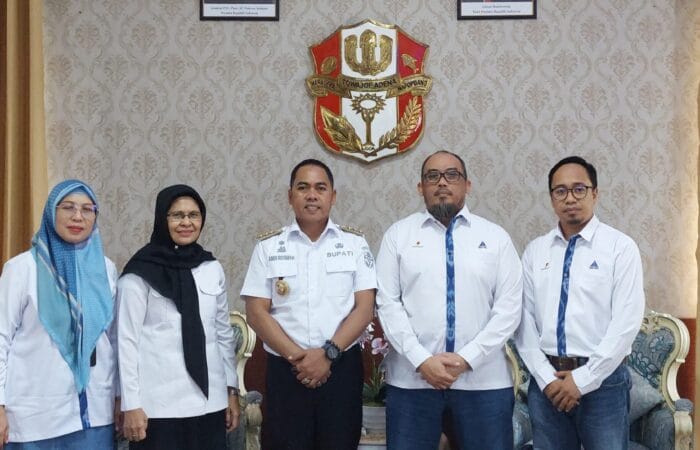
The government’s support and appreciation is evidenced by awarding EEES as “Innovator for the Development of Rolling Cattle in the Context of Realizing Wajo as a Meat Barn in South Sulawesi Province” by the Regent Amran Mahmud in February 2022.
For EEES, local government support is very important in the sustainability of the program considering that the rolling cattle program involves multi-stakeholders, namely livestock groups, village government, sub-district government and related agencies. This support further enhances the synergy of the parties involved and related so that the continuity of this program can eventually reach all the people in the target areas which of course contribute positively to the welfare of the people around the company area and the regional economy. (BF)